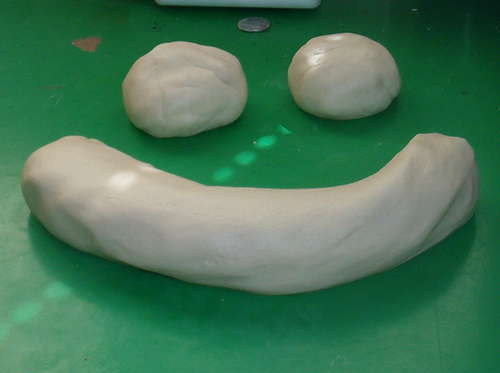
All classes, K-5, are working on clay projects this week. I have decided that the mess that accompanies the fun of working with clay is better made all at once. Since day one of school, students have been asking, "When are we working with clay?" It is by far, students' favorite medium. It's also interesting to see students who typically struggle a bit with two-dimensional artwork really excelling in 3-D. And just the opposite: some students who are really good at drawing have to work a bit harder to be successful with clay. Each class is working on different projects...
FIFTH GRADE is working on a cross-curricular project with social studies. In social studies, students are researching and writing about a hero of theirs. In art, we are creating hero sculptures out of clay. We have made generic, "blank" people this week using the slab method of clay building. We used toilet paper tube armatures to temporarily help our heroes stand up. Next week we will be turning our clay people into heroes like Ghandi, Einstein, Steve Jobs and even Oprah by studying our photos of these people very closely and sculpting faces, hair and later painting and using fabric scraps to make clothes. This photo is 5M's people standing very crowded in a box to keep the clay workable until next week's class.
FOURTH GRADE studied the slab building method when working with clay. We used rolling pins to roll out slabs of clay. We then used rulers, incorporating math into our project, and measured twice and cut once to make our clay slabs 4"x10". We rolled our slabs into a cylinder, added a bottom and created geometric designs and textures on the sides of our mugs. Some students added handles to their mugs.
THIRD GRADE students learned about the coil method and pinch pot methods of building functional clay projects. We talked about the difference between art and functional art. We began with a pinch pot as the base of our functional piece and attached clay coils/ropes/snakes to build our pots. Students were challenged to build their coil pot so that it got wider or narrower as it got taller.
SECOND GRADE students learned that the pinch pot method of building with clay is a technique that was used since the beginning of time by ancient humans. We learned that by looking at the pictures on ancient greek ceramics we can learn about what their lives were like. We made three pinch pots of varying sizes, changed the shapes from circles into squares, hearts and triangles and then use the slip and score method to attach the pots together. We also added feet to the bottom of our projects and decorated the lips of our functional art.
FIRST GRADE students just recently finished our
Rainbow Fish projects and this week we revisited the fish theme when we read
Swimmy by Leo Leoni. We then created clay pinch pots, turned them on their side and learned about slip and scoring (scratch attach) to attach eyes, fins, teeth, tails, tongues and other parts to make 3-D clay fish.
KINDERGartEN students looked at all the things humans make out of clay: plates, cups, containers, vases, and sculptures. We talked about the things in our homes that are made from clay. We read the book
The Empty Pot and talked about honesty and courage. We then made clay pinch pots and created patterns on them using found objects like marker caps, plastic forks, and pencils.