Wednesday, October 5, 2011

Kindergarten Self-portraits

Kindergarten artists learned about portraits and self-portraits. We looked at several portraits--Grant Wood's American Gothic for one. We talked about being art detectives and seeing how many details we could find. We then talked about those details. Why did the artist put them in the painting? Do they tell us something about the people in the portrait? We decided that we could learn alot about the person (or people) in a portrait by looking at their clothes, their facial expression, and the background.
We then created self-portraits and included details about our lives, including a background or the place we are standing in our portrait.
Posted by Picasa

3rd Grade Collages

Third grade artists looked at the artwork of Romare Bearden (1911-1988). Bearden lived in Harlem, New York city and was friends with Duke Ellington, Langston Hughes, and other well-known artists, writers, and musicians. Bearden's collage artwork often features images from his past where he spent many enjoyable summers on his grandparents farm in Pennsylvania. Bearden used many different collage materials in his works, including cuttings from newspapers, magazines, sample catalogues, painted papers, colored paper, foil, wallpaper, wrapping paper, and art reproductions.
We used magazines, construction paper, and scrapbooking paper to create our city collages. Our cities have a sky with stars or clouds, buildings made of shapes in the middle ground, and a street with cars and people in the foreground.
Posted by Picasa

Thursday, September 29, 2011

Space!

4th grade artists learned about the element of design called "space." We learned that any artwork (drawing, painting, photography, even sculpture) has both POSITIVE and NEGATIVE space. Positive space is typically the object in an artwork and negative space is the space around and in the object. We had great discussions about how negative space can be just as important as positive space. We then used construction paper, scissors and glue to create these positive and negative space designs. These images are created from GEOMETRIC SHAPES. The below images feature ORGANIC SHAPES.
Posted by Picasa

Wednesday, September 21, 2011


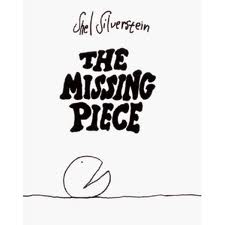
First grade artists studied the difference between lines and shapes. We read Shel Silverstein's "The Missing Piece." We learned that lines are "open". They start and they stop. Lines are used to make shapes. Shapes are "closed". We all chose one letter and we drew that letter repeatedly on our papers. As we drew we discussed variety. We created our letter in a variety sizes, while changing our paper orientation from vertical to horizontal again and again. Eventually the letters that we drew repeatedly filled our papers with shapes. Inside each shape we created a different pattern. We used markers and watercolors to then create patterns using our colors.

Posted by Picasa

Mouse Paint!

Kindergarten Artists read the book "Mouse Paint" by Ellen Walsh. In this fun book, three white mice find three jars of paint. One jar is red, one is yellow and one blue. Thinking the paint is "mouse paint," they each jump in one jar. When they climb out and walk around they drip paint in puddles on the floor.
The yellow mouse steps in a red puddle and makes...ORANGE!
The blue mouse steps in a yellow puddle and makes... GREEN!
The red mouse steps in a blue puddle and makes... PURPLE!

We drew three white mice and used primary paint colors to paint the mice.
We then had our mice do exactly as the mice in the book did and we mixed secondary colors using the primary colors.
Posted by Picasa

Friday, September 16, 2011

Line, Shape & Pattern

Grades 3, 4 and 5 studied the art work of Gustav Klimt. He is the founder of the art nouveau movement. Klimt's artwork is full of lines, shapes and patterns. As a class we talked about the difference between a line and shape--a line is open and a shape is closed. We then worked in groups making a list of as many different kinds of lines as possible. We looked around the artroom and found inspiration for our lines on the tables, ceilings, floor, posters, flags, almost everywhere!

Student then created a simple scribble-line drawing. They then found shapes in their drawing and had to fill each shape with a pattern using only lines. We then used colored sharpies to create pattern using colors. The results are great!
Posted by Picasa

Wednesday, September 7, 2011

First Grade Artists

 First grade artists spent the first art classes this year learning about different kinds of lines. We looked around the art room and found horizontal lines and vertical lines on the brick walls. We saw organic, wavy lines on our wooden tables. We worked drawing cartoon faces using only one type of line for each face.
This week we are reading "Elmer", the story of a patch-work-colored elephant who doesn't like being different than all the other gray elephants. We will be creating a drawing of Elmer, using all the lines we learned about to create shapes and patterns.